Blog

Incorporating Brand Identity into Buffet Display Stands

buffet stands

A strong brand identity can distinguish a hotel or cafe from its competitors. One often overlooked area to reinforce your brand is buffet display stands. This article delves into how you can weave your brand identity into your buffet display stands, contributing to a cohesive and memorable brand experience.

Reflecting your aesthetic through design

The design of your display stands is a significant opportunity to reflect your brand’s aesthetic. A well-chosen design can subtly convey your brand’s personality and enhance the overall ambiance of your buffet.

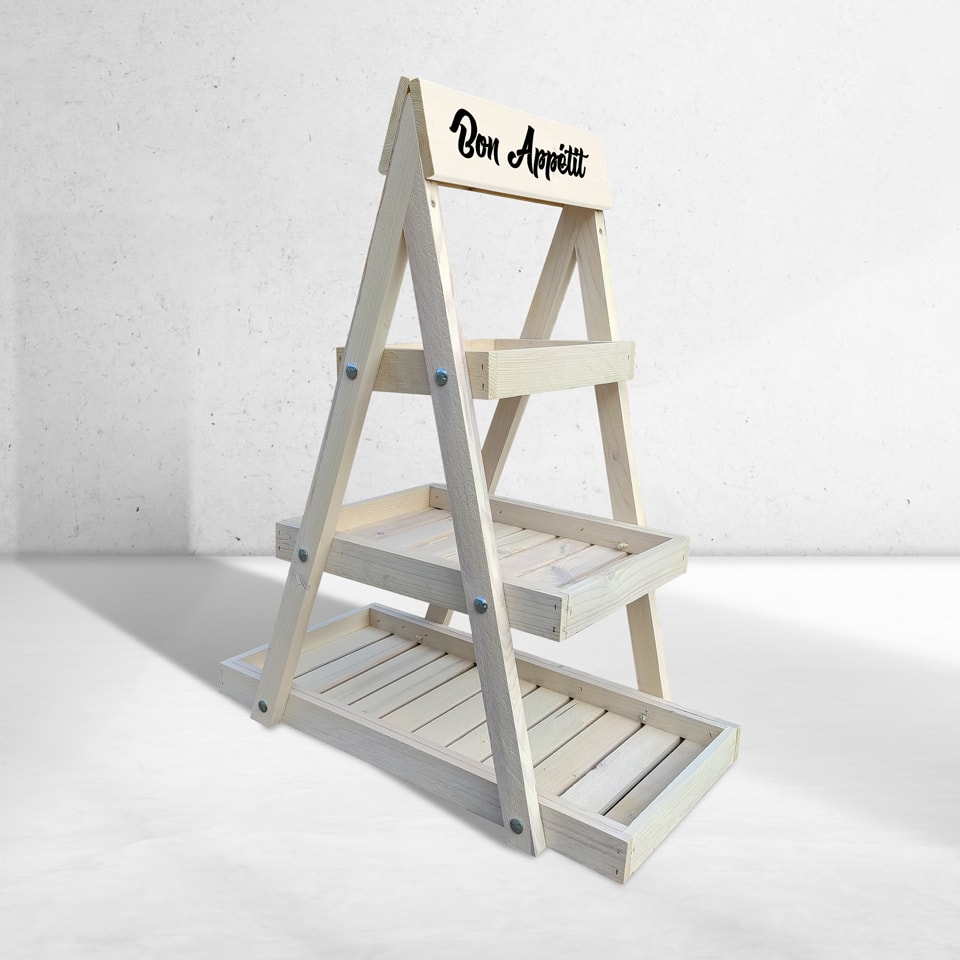
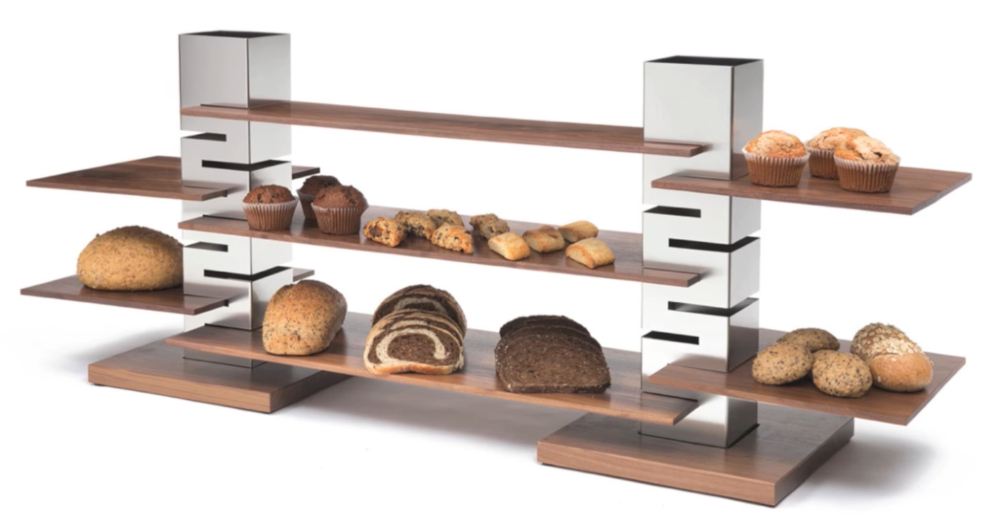
If your brand leans towards a modern and sleek aesthetic, minimalist designs with clean lines and neutral colors would work. For a more traditional or rustic brand, display stands made of natural materials like wood or wrought iron would be more fitting.

The Ace Hotel in New York, known for its industrial-chic aesthetic, does this brilliantly. They use minimalist metal display stands that perfectly complement their overall design theme.

Incorporating your brand’s logo and color scheme

Incorporating your brand’s logo and color scheme into your display stands can create a visual link between your buffet and your brand, reinforcing brand recognition among your customers.

Your logo could be etched onto the stands or used in small, tasteful accents. The color scheme of your display stands could align with your brand’s primary colors or incorporate complementary colors.

For instance, Starbucks Reserve Roastery locations often incorporate their dark green color scheme and subtle logo usage into their buffet and food display stands, creating a unified brand experience.
Selecting themes that align with your brand

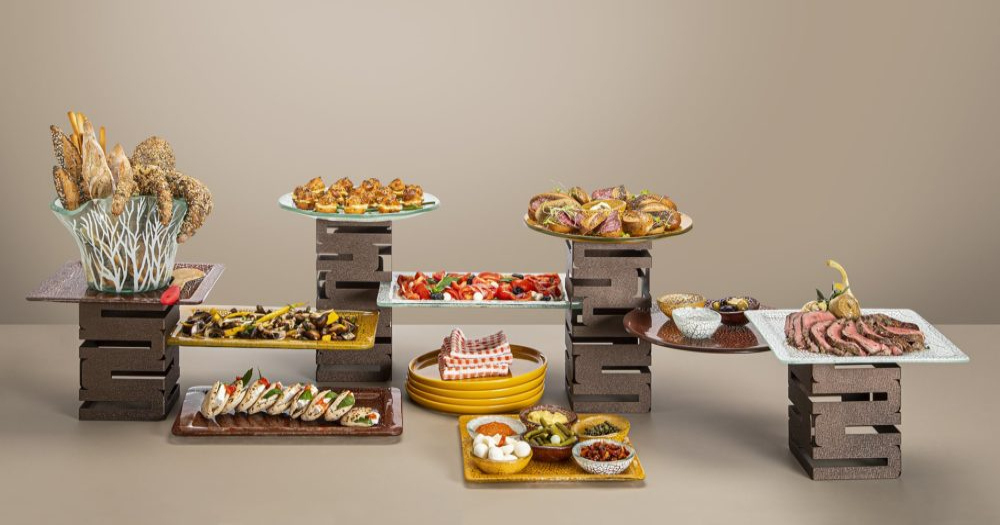
Creating a thematic approach to your buffet display stands can do more than just serve food. It can offer a narrative that aligns with your brand’s identity and ethos. A well-chosen theme can engage guests at a deeper level, making their dining experience more memorable and unique.

Your buffet display stand theme should echo your brand story or principles. For instance, if your brand is about sustainability and locally sourced produce, incorporating a nature-inspired theme could work beautifully. You could choose stands made of reclaimed wood or bamboo and complement these with natural elements. Such as leaves or edible flowers for decoration.

Real life examples

The Noma restaurant, famous for its commitment to local, seasonal ingredients, uses natural materials like stone and wood in its display stands. It emphasizes its connection to the local environment and seasons.

On the other hand, if your brand is more about high-tech and innovation, an ultra-modern theme using metallic or acrylic stands with LED accents could effectively reflect this. You could consider stands with built-in screens displaying engaging content about your food, such as its nutritional information or origin stories.

Take, for instance, the Inamo restaurants in London. They are known for their innovative use of technology in dining. Their buffet area could easily mirror this with futuristic, tech-enhanced display stands.

If your brand is rooted in a specific cultural heritage, using a theme that showcases that heritage can create a unique, immersive dining experience. Display stands could incorporate traditional design motifs, colors, or materials associated with that culture.

For example, a Mexican restaurant brand focused on authentic experience might use vibrant, hand-painted ceramic stands. It would reflect the country’s rich artisan traditions. A Japanese sushi bar might choose display stands designed to resemble traditional sushi serving platters. It would enhance the cultural authenticity of the dining experience.

Consistency: the key to a cohesive brand experience

buffet display stands

Consistency across all visual elements in your buffet area is essential to create a seamless and impactful brand experience. Ensure that the designs, colors, and themes of your display stands are consistent with each other. Furthermore, they should also be consistent with other elements in your buffet area. Such as signage, menu design, table setup, etc.

For instance, the decor at Pret a Manger outlets is uniformly simple and modern, with wood and steel elements. They are consistent with their display stands, creating a uniform and instantly recognizable brand aesthetic.

Conclusion

By thoughtfully integrating your brand identity into your buffet display stands, you can turn a functional item into a powerful branding tool. Whether it’s through design or color, well-branded display stands can create a cohesive brand experience. Remember, every touchpoint matters in building and reinforcing your brand identity.

If this article helped in incorporating brand identity into buffet display stands, you might want to check out our other articles, like these:

For more extra information on maximizing the furniture you choose, as well as product exposure. And other display stand types that boost sales.

Storytelling in Copywriting – Connecting Emotionally with Your Audience

Storytelling in Copywriting

Storytelling has always been a powerful means of communication. Stories are far more than just information because of their capability to inspire. Storytelling is  capable of stirring deep emotions and compelling actions. However storytelling can also be a part of marketing, and a strong one. This is where storytelling in copywriting comes into the picture.

In the world of marketing and copywriting, storytelling is an artful tool that can deeply connect with audiences. After it’s done correctly, it can significantly elevate brand perception. 

Therefore in this article we will discuss storytelling in copywriting, its ability to build emotional connections, and the creation of compelling brand stories.

The power of storytelling in copywriting

Before diving into how storytelling is integrated into copywriting, it’s crucial to understand its significance at all. From our point of view, storytelling in copywriting is a lot more than just crafting a narrative. It’s mainly about presenting your brand in a relatable and also engaging manner.

For example, we all know that stories can provoke emotions, making them memorable and persuasive. They can take an audience on a journey and bring them closer to a brand by making them feel as if they are part of the story.

For example, Apple doesn’t just sell computers and phones. It sells the idea of thinking differently, not even mentioning the elegant design. This concept is evident in their “Think Different” campaign that shares stories of renowned visionaries and rebels who have changed the world.

So to sum up this chapter, it is clear that it’s not just about selling a product or service. It’s about communicating a brand’s values, mission, and why it exists in the first place. 

What are some of the main elements of a compelling brand story

A compelling brand story is more than a chronological account of company events. It’s about sharing your passion, illustrating your unique selling points, and portraying your brand’s journey in a way that resonates with your audience’s values.

Some of the key elements of a compelling brand story are:

  • Authenticity – the story should be genuine and reflect the core values of your brand. 
  • Relatability – it should speak to the audience’s experiences, aspirations, and challenges. 
  • Consistency – you should maintain a consistent voice, tone, and style across all communication channels as it helps to solidify your brand image.
  • Engagement – a compelling brand story should not be a monologue but an invitation for the audience to become a part of your brand’s journey. 

Make sure to invite engagement through open-ended narratives, queries, or calls to action.

Storytelling should always avoid sounding simply like a sales pitch. We always recommend instead focusing on connecting with the audience on an emotional level. Know that a story that resonates with the audience can foster a deeper connection between them and your brand.

Storytelling in Copywriting

Integrating storytelling into marketing copy

Integrating storytelling into your marketing copy isn’t about writing a novel. It is a lot more about using narrative techniques to engage your audience and illustrate your brand’s value.

To successfully integrate storytelling into your marketing copy, first identify your audience’s persona. That means to understand their needs, wants, pain points, and aspirations. This knowledge will allow you to create a story that resonates with them.

Then make sure to carefully craft your narrative. Make sure you begin by setting up the context, introduce a challenge or conflict, and then resolve it. Your product or service should be the ‘hero’ that resolves this conflict.

And lastly – show, don’t tell. Rather than stating the benefits of your product or service, illustrate them through a narrative. For example, instead of saying “our software saves you time,” you might share a story of a busy entrepreneur who regained control of their schedule thanks to your product. 

It is all about a meaningful connection when it comes to good storytelling

Tips for creating authentic stories

And now let’s see some valuable tips on how you can realistically create some good, authentic stories. To ensure your brand story strikes a chord with your audience, you must keep their values, aspirations, and pain points in mind.

To do that, show your audience that you understand their experiences and also empathise with their struggles. Personalising your story makes it easier for your audience to connect with your brand.

Here are our main takeaways on how to achieve this:

  • Keep it simple and relatable – complex narratives can confuse your audience and make your message harder to understand. A simple, straightforward story can often make a stronger impression.
  • Leverage emotion – emotion drives action. Whether it’s happiness, sadness, surprise, or fear, tapping into your audience’s emotions can make your story more engaging and memorable.
  • Incorporate social proof – incorporating real stories from satisfied customers can help build trust and credibility. These testimonials provide tangible proof of your product’s benefits. It makes your brand more appealing to potential customers.

Storytelling goes beyond just text. Visuals, audio, and interactive elements can all contribute to the narrative and make it more engaging. Images, videos, infographics, podcasts, and interactive quizzes are all powerful tools for storytelling. 

As we mentioned in one of our previous articles, Podcasting for Business Growth is a great idea. It shows an example of how storytelling can be created in audio and/or video formats. 

A short video can illustrate the impact of your product more vividly than text alone. Similarly, an infographic can simplify complex information and make it more digestible.

podcasting as a business improvement

John Osborne as an example on great storytelling

We want to showcase an example that has inspired us when it comes to storytelling. Our hero of this article topic is a British writer, John Osborne. He writes books, radio plays, and scripts. The Sky 1 comedy After Hours was co-created by him. He attended the University of East Anglia and now resides in Norwich, England.

Mainly he is known for his poetry books that he has written. To us it seems very important to seek inspiration from truly great storytellers. John Osborne has been described as outstanding, humorous, perceptive, and humble. 

Osborne has had poetry published in The Guardian, Rialto and The Big Issue. His poems have also been broadcast on Radio 1, Radio 3, Radio 4,  Soho Radio, XFM, and BBC6 Music. 

This only shows just how far great storytelling can get you. Osborne regularly appears at venues across the country performing poetry. Since 2006 he has performed at the Glastonbury and Latitude festivals, as well as venues such as The Roundhouse, Norwich Arts Centre and Underbelly. Just think what this kind of storytelling skills could do for your business!

Conclusion on authentic storytelling

In conclusion we can summarise that storytelling in copywriting can significantly amplify your brand’s appeal and resonance. By crafting authentic, relatable narratives that speak to your audience’s values, you can really connect with them on a deep, emotional level. 

Make sure to check out more of our articles that could help your business such as:

We encourage you to remember, you’re not just selling a product or service. You’re sharing a story. And everyone loves a good story.

The Appeal of Wooden Easel Stands in Marketing

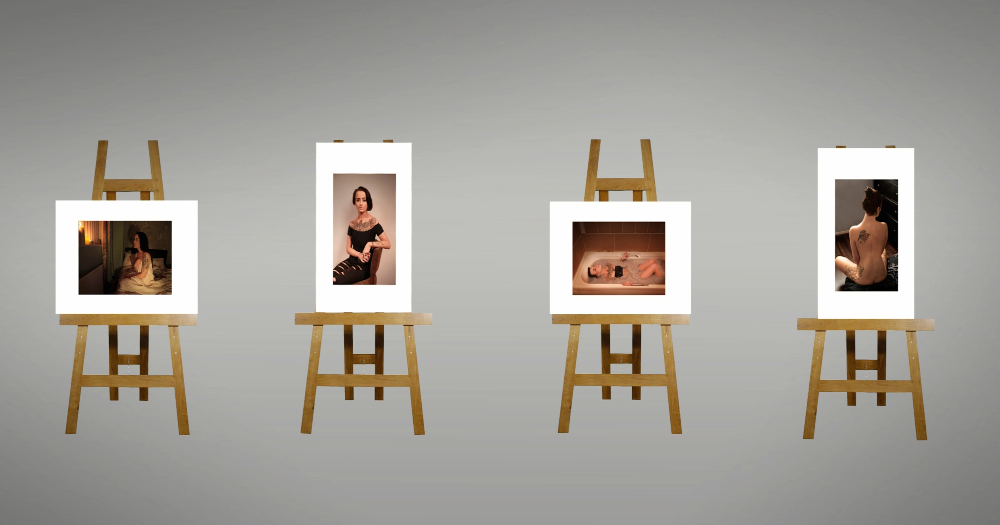
easel stand aesthetics

In the realm of marketing, presentation plays a pivotal role. From trade shows to retail displays, how a product or message is showcased can significantly impact its perception. Enter wooden easel stands – a blend of form and function that’s been adding charm to marketing strategies.

Let’s explore the allure of these stands. We will be focusing on their aesthetic appeal, durability and how to select the perfect one for your needs.

The art of presentation

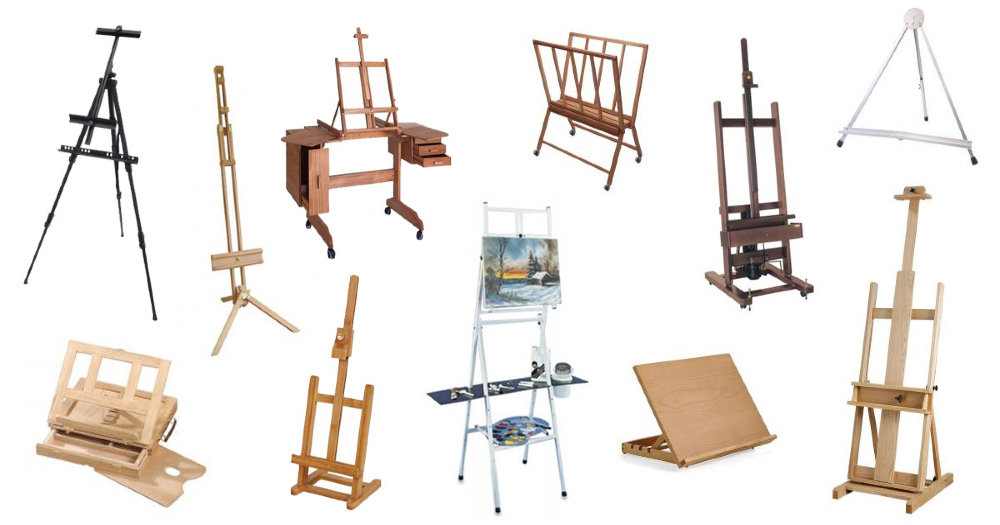
wooden easel stands

An easel stand isn’t just a support structure. It’s part of the overall presentation. The aesthetic value it brings to your display can influence how customers perceive your brand. Their natural texture and grain bring warmth and an organic feel that’s hard to replicate with other materials. These stands can enhance a variety of settings, from an artisanal boutique to an upscale gallery, adding character and visual interest to your display.

Moreover, easel stands are highly versatile. They can be painted or stained to match any color scheme and can accommodate various styles, from minimalist modern to ornate vintage designs. For example, a sleek, black-stained easel could provide an elegant contrast for a vibrant painting in a gallery. While a distressed, whitewashed easel might be the perfect backdrop for artisanal soaps in a boutique.

The role of durability

While the aesthetic appeal of wooden easel stands is evident. However, their durability is an equally important factor in their popularity in marketing. Wooden easel stands are known for their robustness. High-quality wood can withstand weight and wear, making these stands ideal for frequent use. Different types of wood offer varying degrees of strength and durability, catering to a range of display needs.

This durability extends to outdoor use as well. With the right treatment and care, wooden easel stands can withstand the elements. It makes them a reliable choice for outdoor events or displays. Picture a local farmer’s market. A stained and sealed wooden easel can brave the elements while proudly displaying the day’s specials.

Tips for choosing easel stands

Selecting the right easel stand involves more than just assessing its physical attributes. It’s about finding a stand that aligns with your brand story and aesthetic.

Here are some tips for choosing the right easel stand:

  • Consider the image you want to portray. If your brand values tradition and craftsmanship, a hand-carved easel made of rich mahogany might resonate with your ethos. If you’re a modern art gallery, a minimalist easel in a neutral tone could complement your exhibits without detracting from them.
  • Keep in mind the setting. If you’re setting up at an outdoor event, a rugged, rustic easel might fit in perfectly with the natural environment. A polished and stained easel might better match the sophisticated decor you’re displaying at an upscale trade show.
  • Easel stand is an extension of your brand and display. It’s not just about holding up a product or sign – it’s about adding an extra layer of interest, detail, and character to your presentation.

By considering aesthetics, durability, and brand alignment, you can choose a wooden easel stand that serves a practical purpose and enhances the overall impact of your marketing efforts.

Maintenance and care

The aesthetic appeal and durability of wooden easel stands make them a worthy investment in marketing. To ensure these stands continue to serve their purpose and retain their charm, proper maintenance, and care are crucial.

Here are some useful tips:

  • Clean your easel stands regularly. Regularly dust off the surface and, when necessary, clean it with a mild wood cleaner. Avoid harsh chemicals that can damage the wood’s finish.
  • Keep your easel in an environment with stable temperature and humidity. Extreme conditions can cause wood to warp or crack. If you’re using the easel outdoors, ensure it’s adequately protected against moisture and sunlight.
  • Repair minor damage promptly. Small scratches or chips can often be fixed with a bit of touch-up paint or stain. For more severe damage, you might need to sand the area and refinish it.

With these steps, your wooden easel stand can continue to be an appealing and durable component of your marketing strategy long term.

Easel stands in marketing

Wooden easel stands are more than just functional items; they’re powerful marketing tools that can enhance the presentation and perception of your brand.

From retail stores to art galleries, wooden easel stands can elevate the visual appeal of any display. Their rustic charm brings warmth and authenticity, while their durability ensures they can withstand daily use and the rigors of various environments. Choosing the right easel stand is an art in itself, requiring a keen understanding of your brand and audience. But with careful selection and proper care, these stands can become a valuable asset in your marketing toolbox.

So next time you plan a product display or organize an event, consider the power of easel stands. Their blend of aesthetics and durability could be the missing piece in your marketing puzzle. It offers a unique and impactful way to present your brand to the world. If you want to expand your knowledge in advertising different marketing furniture and best practices and tips for it, make sure to check out this page for more information.

The Art of Visual Merchandising Using Retail Shelving

Visual Merchandising

In the retail world, visual appeal is a powerful sales driver. That is something that works both noticeably as well as subconsciously. The art of visual merchandising is akin to storytelling – it creates a narrative that not only showcases your products but also communicates your brand’s identity. 

And retail shelving is an essential component of this narrative. It essentially allows your  products to be displayed attractively and creatively. 

So in this article, we will delve into the artistic side of retail shelving and see how it can be used to enhance visual merchandising. That of course is useful mainly for attracting customers and encouraging purchases.

It is important to create colour-coordinated displays

Balance is a key principle in visual art, and it applies just as importantly to retail shelving. You don’t want to create a display of products that is too chaotic when it comes to colours or arrangements. 

A balanced display is one that is pleasing to the eye and can make product selection easier for customers. And to achieve this balance, you might want to consider the size, shape, and placement of the products. 

We always suggest trying to mix larger items with smaller ones and avoid clustering too many similar items together.

Incorporating colour coordination in your retail shelving can significantly enhance visual appeal. Colour can evoke emotions and impact buying decisions. So consider arranging products by their packaging colour or using shelf liners or signage in colours that complement the products. 

For instance, a display of organic products might use green shelf liners or signage to convey a natural, eco-friendly vibe. That will be both effective and beautiful to look at.

Visual Merchandising

Incorporating signage into your retail displays

Signage is a vital element in visual merchandising that goes beyond conveying information. It can also contribute to the visual appeal of retail shelving. So don’t be afraid to add some signage to your retail shelving. But still remember to take into consideration the previously mentioned tip about colour coordination and such.

Creative and eye-catching signage can draw attention to specific products or deals. And what’s even better, it can also guide customers around the store, and enhance the overall aesthetic of the display.

You can see our article about Visual Merchandising Techniques with Vendor Display Stands for additional tips. 

When incorporating signage, remember to always consider the design, colour, font, and placement. Signage should be consistent with your brand identity and the display’s overall look and feel. Also, it should be placed where it’s easily visible and complements the products rather than obscuring them.

Creating themed sections is always a good move

Themed sections can make shopping a more engaging and exciting experience. By creating themed sections you will make sure that your customers can find everything they need that much easier.

The products your customers need then can be found based on various concepts, such as seasonal items, product categories, colour themes, or even storytelling themes like ‘A Summer Picnic’ or ‘Healthy Living.’

Besides, themed sections can not only help customers find related items quickly but also inspire them to make additional purchases. They also provide an opportunity to showcase your creativity. 

For example, a ‘Back to School’ section could feature not only school supplies but also lunchbox snacks, children’s clothing, and educational books. And all arranged in a visually engaging way.

Lighting creates an illuminated shopping experience

Never underestimate the power of good lighting in visual merchandising. Just like a spotlight in a gallery showcasing a piece of art, strategic lighting can highlight your products. It can  create depth, and bring warmth to your retail space. 

We suggest you use a mix of ambient, task, and accent lighting to create an inviting atmosphere and make your products shine.

But you can of course also use dim lighting if that is your brand’s style. In the photo below you can see how darker light can also be equally effective if that is the style you’re going for.

Visual Merchandising lighting

Conclusion on visual merchandising

In conclusion we can summarise that visual merchandising using retail shelving is an art form that combines creativity and strategic thinking. Creating balanced and colour-coordinated displays are just a few of the ways you can transform your retail shelves into an attractive showcase for your products. 

Add in the right lighting, and your store can offer a visually engaging shopping experience that captivates customers and encourages sales. 

And that is what we wish for you – great customers and a lot of sales!

Make sure to check out our other related articles such as Enhancing Customer Experience with Interactive Kiosks in Banking

Visual Merchandising Techniques with Vendor Display Stands

Vendor display stands provide businesses with an excellent opportunity to showcase their products in a captivating way and enhance customer engagement. The art of visual merchandising, the practice of presenting products in a way that is appealing, plays a crucial role in driving sales and strengthening a brand’s image.

In this article, we will explore visual merchandising principles for vendor display stands. Techniques for arranging products and utilizing space, and tips for storytelling and creating engaging narratives.

Visual merchandising principles for vendor display stands

Visual merchandising is more than simply arranging products on a stand. It’s a strategic practice that leverages aesthetics to stimulate customers’ interest and influence purchasing decisions.

Here are some key principles that govern visual merchandising for vendor display stands:

  • Balance, whether symmetrical or asymmetrical, is crucial for maintaining visual harmony. Symmetrical displays create a sense of order, while asymmetrical ones bring dynamism and interest.
  • A focal point draws customers’ attention to a particular area of the stand. This could be a best-selling product, a new release, or a promotional item.
  • Repeating certain elements, such as color, shape, or product type, can create a sense of cohesion and harmony.
  • Contrast, achieved through colors, shapes, or textures, can make a display stand out and attract customers’ attention.

These are some of the many merchandising principles for vendor display stands to make customers interested in your brand and make a purchase.

Arranging products and utilizing space

Effective product arrangement and space utilization can significantly enhance the appeal of a display stand.

Here are some techniques:

Pyramid principle

Arrange products in a pyramid or triangle shape, with the highest point in the center. This arrangement guides the customer’s eye naturally from top to bottom and side to side.

The rule of three

This principle suggests that groupings of three are inherently more appealing and memorable to the human eye than other numbers.

Utilize different levels

Play with different levels and heights to make your display more interesting and dynamic. This can also be a great way to emphasize specific products.

Don’t overcrowd

While it’s essential to utilize space effectively, avoid overcrowding. Each product should have its own ‘breathing space’ to stand out.

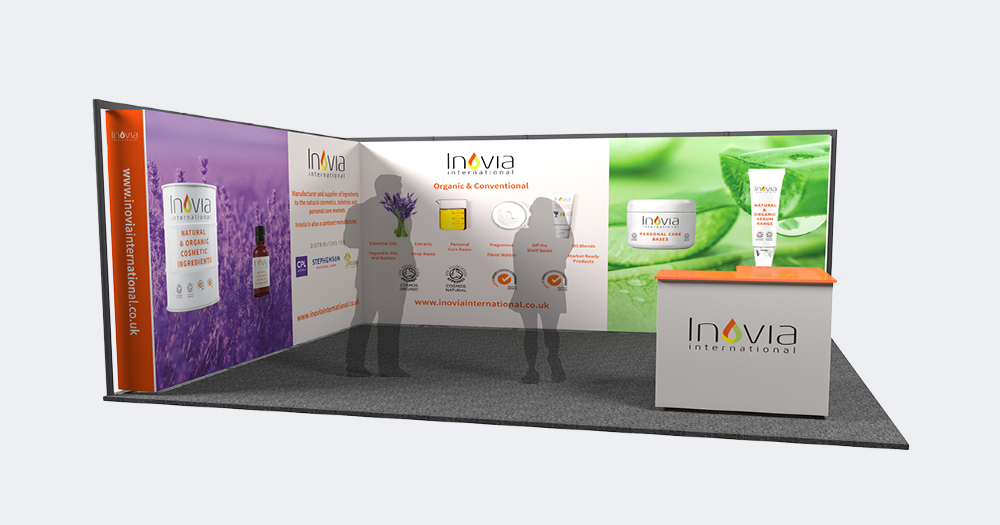
inovia vendor display stand

Storytelling and creating engaging narratives

Stories captivate people; they bring products to life and create an unforgettable connection with customers. Storytelling and connecting emotionally with your audience is the most effective way to make customers more engaged and invested in your product or service.

Here’s how you can leverage storytelling on your display stand:

Create a theme

A theme can serve as the plot of your story. This could be anything from a holiday, season, or color, to a lifestyle concept.

Use signage

Signage can be used to provide context and details that contribute to the story. This could be information about the product’s origin, how it was made, or its benefits.

Incorporate props

They can add depth to your story and make it more engaging. Prop should complement the products and not distract from them.

Examples of effective visual merchandising

apple visual merchandising

There are many brands that have successfully leveraged visual merchandising techniques to enhance their vendor display stands.

Apple

Apple’s display stands are renowned for their minimalist design. Products are displayed against a clean, white background, and each product has ample space to stand out. This aligns with Apple’s brand identity of simplicity and premium quality.

Lush Cosmetics

Lush uses vibrant colors, distinctive shapes, and inviting scents to attract customers. Their products are often arranged in a pyramid shape, with signage providing information about ingredients and usage.

Conclusion

Visual merchandising is an art that requires strategic planning and creativity. By leveraging key principles, arranging products effectively, utilizing space wisely, and using storytelling to create engaging narratives, businesses can craft compelling vendor display stands that attract and captivate customers, ultimately driving sales and enhancing brand image.

The combination of these elements brings the products to life, evoking emotions and providing a memorable shopping experience for customers. Successful brands like Apple and Lush Cosmetics demonstrate the power of effective visual merchandising in drawing in consumers and creating a lasting impression. As you create or redesign your vendor display stands, consider these principles and techniques to maximize their impact.

Podcasting for Business Growth

Podcasting for business growth

A podcast is an episodic collection of audio recordings that include music, interviews, or various other sounds. Podcasts have been popular for a while at this point. And they are growing more and more popular each day therefore it might be smart to create one yourself. Podcasts are great for entertainment and learning, but did you know that podcasting for business growth is a smart move too? 

Podcasts are a fantastic method to give your customers content while also increasing traffic to your website. They are an excellent way to engage with potential clients and interest them about your company.

In this article we will explore the topic of podcasting for business growth – how to get started and how it benefits your company in the long run.

How to get started

A content developer records an audio file (or several files) and uploads them to the Internet so that anybody can download and listen to them. This process is known as podcasting.

The terms “iPod” and “broadcast” are combined to form the word “podcast”. The term “podcast” gained popularity since it was one of the first methods that people could readily listen to digital audio files on their portable music players, even though you can listen to podcasts on a variety of devices.

You only need a computer with an internet connection and some basic audio recording gear to start a podcast. After you’ve finished recording your audio, you have to upload it to a hosting service (more on that in a second). Anyone with an internet connection can find and download your podcast once it is live online. Sounds simple enough, right?

Some of the most popular platforms to use for publishing your podcasts are Apple Podcasts, Spotify, or Stitcher. They enable new episodes to be downloaded to your device immediately upon release. Additionally, you can access podcasts straight from websites like SoundCloud and YouTube.

Podcasting for business growth

Reasons why your business needs a podcast

Although they have been around for a while, podcasts have gained huge popularity and become a powerful tool for business communication, especially in recent years. As more individuals use them to get information while on the go, they are constantly growing in popularity.

Asking your listeners questions and collecting their thoughts on various subjects can allow you to gain feedback from them. 

The use of podcasts in marketing is a great idea for companies of all sizes. It can be applied for brand exposure, customer acquisition, or even lead generating. For any business that wishes to produce high-quality content in a more individualized way, it is the ideal marketing technique.

To attract new customers from all over the world

Most business owners must be skilled at consulting with clients one on one. The issue is that developing relationships takes time, making it impossible to do hundreds of consultations and client contacts each week.

Brands may reach a large audience through podcasting with little effort. Those that connect with the podcast’s host, offerings, or message can approach businesses in their own time and with all the necessary preparation.

In addition, you establish yourself as the authority by imparting your knowledge. You appear valuable and helpful to the listener, which further strengthens your credibility. You gain trust as your relationship with the listener develops.

Conversion rates increase when customers perceive you as a knowledgeable friend rather than a mysterious, ethereal voice.

To attract customers to your niche industry

Unlike other forms of communication, podcasting is incredibly effective in focusing on a specific audience’s individual interests and preferences. Thousands of podcasters have recently boosted the amount of content they produce, but niche podcasts are one important avenue for expansion. A niche is a topic with a very specialized target in mind.

Take, for instance, a logo design company that specializes in graphic design. It would be considered a specialized area if they created a podcast about expertly delving into logo design. Speaking on a certain topic attracts your ideal target market—those who require a logo or desire to improve their creative skills.

It’s important to keep in mind that 1,000 engaged listeners are far more important than 1,000,000 inactive ones that don’t share your show or purchase anything.

To increase website traffic

Content is king, and podcasting can boost website traffic and content. Businesses who want to get traction and expand their audience are aware that the greatest approach to drive traffic is by producing a ton of new content. Podcasting fits in with that objective well.

An excellent way to increase organic traffic to your website is by hosting a podcast there. Additionally, having a variety of content types, like a podcast, will greatly increase your internet reach as prospective consumers and clients look for information about your field online.

To make networking and more marketing opportunities possible 

It’s perfect to use podcasting to grow your network of expert touchpoints, especially if you opt to speak with influential business people. As we all know, networking and establishing relationships are essential for business development.

You may provide listeners a more rewarding experience by inviting reputable guests onto your show. Industry experts, business associates, prospective and active partners, clients, and customers might be guests.

Podcasting for business growth

How to make money with podcasting

While growing your business, you can also eventually grow your income with the help of your podcast. There are a few ways how podcast creators make money, so here are some of them.

Keep in mind that before starting to make money from the podcast, you will need a valid listener base to start off with. 

Advertising and sponsors

Firstly, advertising is the most common monetization method for podcasts. Podcasters can include advertisements in their episodes, either as pre-roll (at the beginning), mid-roll (in the middle), or post-roll (at the end) spots. Advertisers pay for these slots, and the podcast host or network earns revenue based on the number of listeners and the advertising rates.

Another way to make money is through sponsorships. Podcasts often have sponsors who provide financial support in exchange for promotion during episodes or mentions by the host. These sponsorships can take the form of ad-reads, where the host personally endorses the product or service. Or they may involve product placements or affiliate partnerships.

Crowdfunding and subscriptions

Some podcasters rely on crowdfunding platforms such as Patreon, Kickstarter, or similar services to receive financial support directly from their audience. Listeners can contribute a monthly or one-time payment to support the podcast’s production and receive additional perks or exclusive content in return.

Creating regular subscriptions is another way. However this will only sound like an appealing deal for those who consider themselves a fan of your podcast. Meaning it would be smart to start your podcast as a free content and then later on build up to monetization. 

Creating and selling merchandise

Many podcasters create merchandise related to their shows, such as t-shirts, mugs, or other branded items. They sell these products to their audience, often through their website or online stores. That way listeners have a chance to support your podcast as well as get something cool for themselves.

Additionally, podcasters may collaborate with brands to create co-branded merchandise and share in the revenue generated. Which is a win-win type of situation. 

It’s worth noting that not all podcasts monetize in the same way, and some podcasters may use a combination of these methods to generate revenue. The specific approach depends on the podcast’s size, niche, target audience, and the goals of the podcast host or network.

We hope you enjoyed this article about podcasting for business growth. An idea can truly go a long way, and improve your business sales!

More about marketing related information see our articles Effective product placement for increased visibility and How To Create Quality Video Content.

Thanks for reading our articles!

Touch Screen Kiosk for a Car Showroom

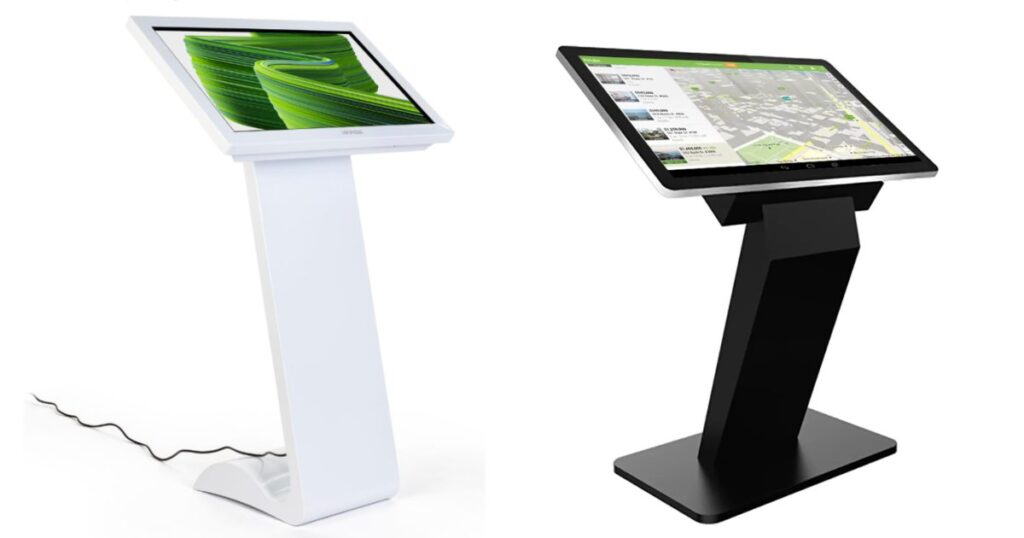
Purchasing a touch screen kiosk

In today’s digital age, technology has affected various industries, including car sales. In car dealerships, it is important to think about getting customers involved as much as possible. One way to achieve this is through purchasing a touch screen kiosk. But how much does it cost to purchase an info display for a car showroom?

Car dealers are constantly looking for new ways to engage potential buyers and provide an interactive shopping experience. One powerful tool that has emerged in recent years is the touchscreen display, also known as a kiosk. And as it turns out, its prices are not so unaffordable.

In this article, we will find out how purchasing a touch screen kiosk is a good move with its many advantages for car showrooms.

A display can improve the shopping process at a car dealership

Display stands are very popular these days. They can be used in a variety of ways, such as displaying advertisements on them or allowing customers to interact with them.

Here’s a roundup of some of the most popular ways displays can improve the overall shopping experience at a car dealership.

Interactivity

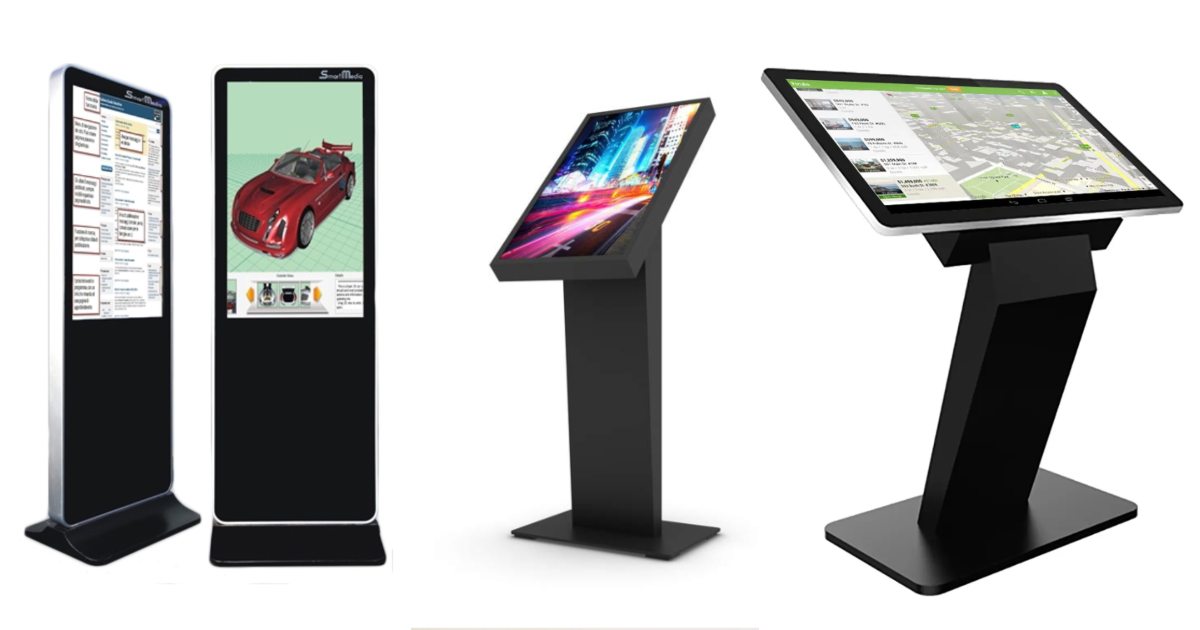
Touch screen displays offer an exciting and interactive experience for showroom visitors. They allow potential buyers to easily explore different car models, their configurations and features.

With just a touch of the screen, customers can access detailed information, view high-resolution images, watch videos and even compare multiple cars side-by-side. This interactive approach improves customer engagement and helps them make informed purchasing decisions.

Personalized content

Car interiors can use touchscreen displays with personalized content. They provide a great opportunity to display personalized content that can be customized according to different preferences. This flexibility allows dealers to highlight specific car models or highlight unique offerings such as enhanced safety features or fuel efficiency.

You can view things like car color and variations in other colors, different machine raw materials for painting, etc.

By providing comprehensive and up-to-date information, touchscreen displays increase the confidence of potential buyers by offering a wide range of information.

Purchasing a touch screen kiosk

The touch-sensitive kiosk also promotes sales

Touchscreen displays offer high-resolution visuals. They allow potential buyers to study cars in detail, and as a result learn all the most important information about them. Customers can zoom in on interior elements, explore different color options, etc.

Touch screen displays also allow dealers to showcase related products and accessories. By highlighting compatible add-ons, such as navigation systems, entertainment packages or safety upgrades, car dealers can encourage customers to consider additional purchases.

This not only increases revenue, but also improves the overall customer experience.

What prices should you expect?

There are a number of cost factors to consider when implementing touchscreen displays in a car interior.

These may include:

  • Hardware Cost: Touchscreen displays vary in price based on size, resolution, and functionality. It is important to properly assess your dealer’s specific requirements and budget.
  • Software Development: Customizing the user interface, integrating the required applications, and ensuring a smooth user experience can require software development costs.
  • Maintenance and support: Regular maintenance, software updates and technical support should be factored into the overall cost to ensure optimal performance of touchscreen displays.

We recommend that you inquire about real prices on the Touch screen kiosk page. There various types of info display are offered. It is often possible to find out the prices by placing an order and inquiring about them directly from the manufacturers.

Installing touch screen displays in car showrooms brings many benefits to both dealers and customers. The interactive nature of these displays enhances the car buying experience and, just as importantly, drives sales.

Now you know how much it costs to buy an info display for a car showroom. We hope this article was helpful!

To learn more about where to put your newly bought display, read our article about Effective product placement for increased visibility in stores.

While there are costs associated with implementing touchscreen displays, the long-term benefits justify the investment.

Best Examples of Personalized Wooden Crates

personalized wooden crates

Personalized wooden crates have become increasingly popular in recent years as a particularly versatile storage solution. In addition, they can also look very stylish, so such  can be used both for storing goods in stores and also for storing personal items in the home. It also highlights the practical use of wooden crates in various situations.

To give the room not only an organized look, but also individuality and charm, you can choose personalized wooden crates. This way, you can give them a relaxed look and highlight what is stored in the crates or your shop.

In this article, we will look at what personalized wooden crates are and the most common examples of them. Let’s take a look at how personalized wooden crates from the ColorWoodLatvia brand can showcase both creativity and convenient functionality at the same time.

personalized wooden crates

Wooden crates with custom lettering

One of the most common ways to personalize wooden crates is to add stylish inscriptions to them. These crates can be decorated with words, sayings, interesting quotes or even company slogans.

This, of course, depends on whether you need wooden crates for personal storage or within the company. The possibilities are endless, as everyone can adapt the wooden crates to their needs and creative ideas.

For example, a crate with personalized letters can be a delightful addition to the nursery, serving as a stylish and functional solution for storing baby essentials. Similarly, crates with a personalized design can add a personal touch to any room, serving as both storage and decorative elements.

personalized wooden crates logos

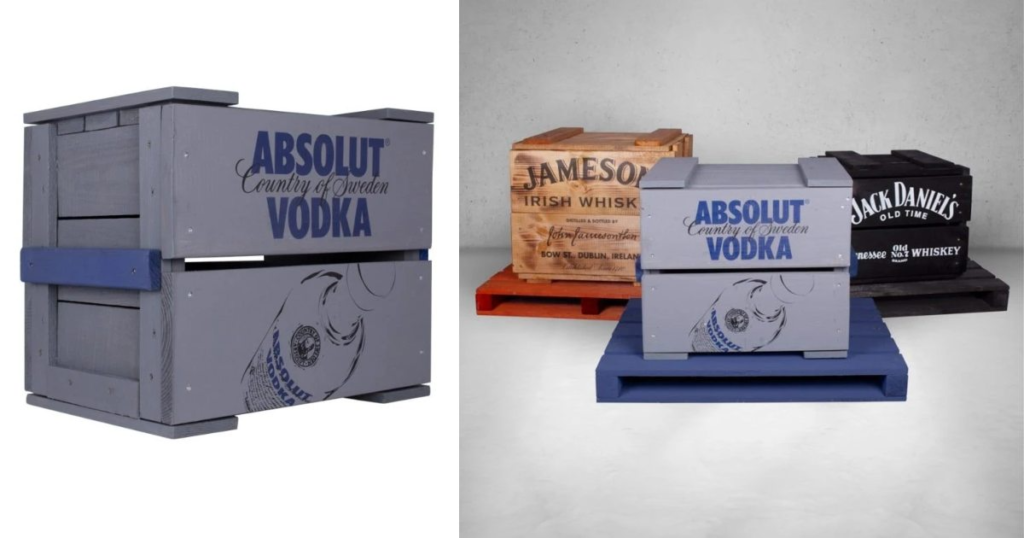
Personalized wooden crates with photos or logos

Another popular option is to print personalized wooden crates with company logos or other images. Such crates will serve as a good way to promote business. Printing is one of the most popular marketing techniques because it works and is relatively cheap.

The techniques are, of course, different. For example, a family photo on a wooden crate can create a nostalgic atmosphere while providing storage for keepsakes.

Companies, on the other hand, can use crates with their logos to store and display products while promoting brand awareness. The combination of the natural beauty of wood with personalized images creates a visually appealing and efficient storage solution.

wooden crate display stand

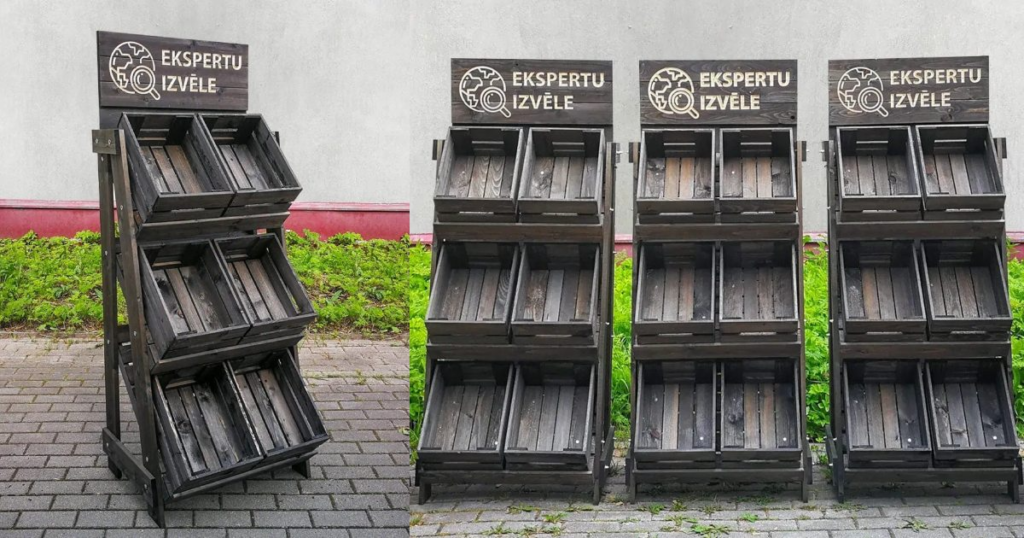
Crates with custom shelving and storage options

And even personalized wooden crates can be adapted to specific storage needs, such as in stores. Wooden crates can be used to make good product storage and display stands, as shown in the image above.

By combining the crates into one stand and creating such personalized shelves, a new storage solution is created. Such wooden crates provide practicality while maintaining the appeal of simplicity.

army-style wooden crates

Storage option for various marketing solutions

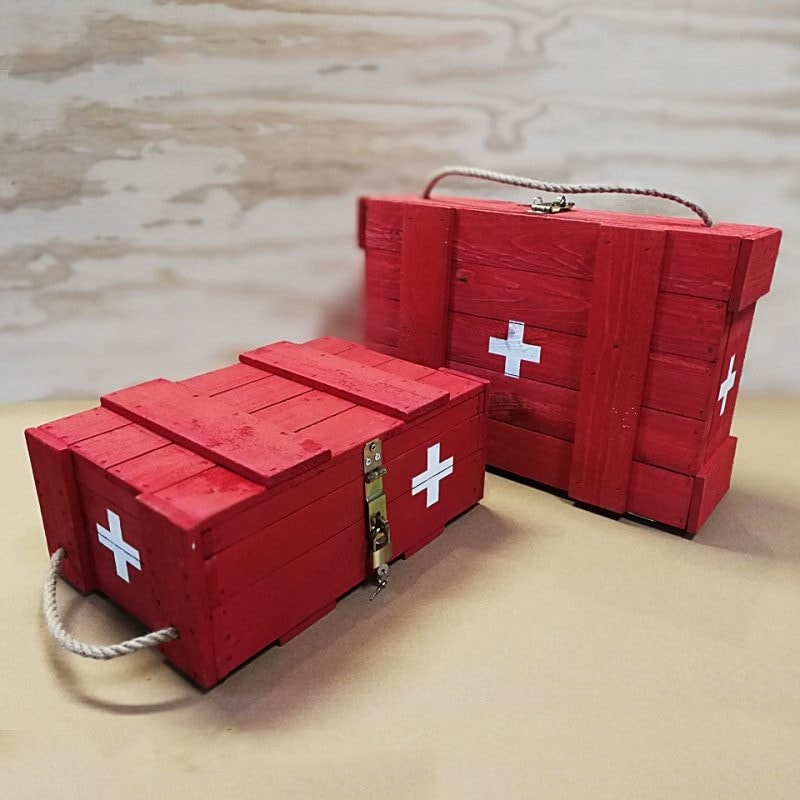
Army-style wooden crates are a specially designed storage solution for a variety of marketing or product display needs. These crates offer a combination of durability and style. They are made to order and are suitable for a wide range of applications, such as storage or advertising of souvenirs or other items.

ColorWoodLatvia emphasizes custom production, allowing personalized designs that fit specific requirements. These wooden crates are not only practical for storage but also serve as decorative pieces that add a touch of rugged charm to any setting​

Personalized wooden crates

You can, of course, go even further and personalize each crate with internal compartments. The ability to customize the internal structure of the crates adds even more functionality. It ensures that they are suitable for different preferences.

All in all, if you’re looking for a versatile and visually appealing way to display or store items, personalized wooden crates are definitely a great choice.

Please check out other our articles about display stands:

Effective Product Placement for Visibility in Stores

Effective product placement

In the competitive world of retail, customer focus is very important. It is valuable to draw the attention of customers with the way products are placed in the store, as this is what most directly promotes sales.

Effective product placement in the store is important as it increases visibility. This is especially important for high-value products with a higher markup. When strategic product placement is done right, it can attract more customers, increase sales and, as a result, increase the success of the company.

The purpose of this article is to introduce the art of in-store product placement, focusing on strategies that optimize the visibility of high-value products. So in this article, learn more about what effective product placement is and how to do it right in 6 different ways.

1. Positioning of main products at eye level

Whether you are a store owner, manager or product marketer, an effective understanding of product placement techniques will be very helpful. The first tip is to make sure that the best, highest value products are placed in the best shelf positions. The way to achieve this is by placing these products at eye level.

This ensures that customers can easily spot them and increases the chances of attracting attention. The end stands and the first shelves of the store’s sub-sections are usually highly visible places when entering the store.

Eye-level shelves are the most valuable ally in any store. Placing premium products at eye level increases the chance that customers will notice them. This is because customers tend to scan the shelves at eye level first.

Effective product placement

2. Displays placed in advantageous places

We recommend using attractive displays at checkouts and other high-traffic locations to draw attention to your valuable products. These displays can include attractive signage, product samples, or even interactive elements to engage customers.

It pays to strategically place these displays near checkouts or high-traffic areas where customers spend time waiting in line. Of course, we still need to think about making these displays visually attractive and attention-grabbing.

Good product display stands provide last-minute shopping opportunities and can greatly increase the visibility of your products. It is worth investing in them as it will definitely pay off in the long run.

3. Strategic placement of related products

Another tip is related to affiliate products. We recommend that they be successfully combined with each other – placing high-quality products next to additional goods.

For example, if you sell high-end cookware, place it near gourmet food ingredients or recipe books. This encourages customers to consider purchasing multiple items, and as a result, increases awareness of your products.

Customers are more likely to consider purchasing multiple items, and your products benefit from increased visibility by being close to popular or related products.

4. Place similar products next to each other

It is also important to think about the fact that not only related products, but also whole product categories are placed in close proximity to each other. For example, especially high-value products should be placed near related or popular items.

Positioning your products next to well-known brands or best-selling products in the same category can capitalize on existing customer interest and increase visibility. Customers often gravitate towards familiar items or products they perceive to be popular.

display stands

5. Create visible visual contrast

Packaging and product design (including their placement) play a crucial role in product visibility. Therefore, we recommend that you learn more about what color contrast to use.

Color psychology has important implications for sales promotion. Creative packaging is also used to make the products stand out and be noticed on store shelves.

Use bolder fonts, brighter colors, unique shapes or special packaging that stands out among other products on the shelves. It is worth considering the general aesthetics of the store and aiming to create a visual contrast that catches the customer’s eye.

In addition, if the store displays are well lit and, what is no less important, correctly lit, it will be possible to significantly increase the visibility of the products in the eyes of customers

6. Take care of product demonstrations

You can also organize product demonstrations or interactive displays that demonstrate the features and benefits of your premium products. Not only does it attract attention, but it also helps potential customers understand the value proposition.

Whether it’s a cooking demo for high-end kitchen appliances or a beauty tutorial for luxury skin care products, these experiences capture attention and help potential customers understand the value proposition. When customers see a product in action, they are more likely to show interest and remember it later.

This is most observed in grocery store product tastings – people like to come, taste something and learn more about the delicious product. It can even happen with other products if an interesting demonstration or human involvement is carried out.

It’s important to remember that effective product placement in a store is an ongoing process. Regularly evaluate the performance of your placements, experiment with different strategies and adapt to changing customer preferences and store layouts to maintain maximum visibility of your valuable products.

Please check out these articles too:

May you manage to highlight the best products and sell them successfully!

The Top Market Research Methods For Small Businesses

marketing methods

As a small business owner, I know how challenging it can be to make informed decisions about my products or services without proper research. Having good market research is essential for not only staying competitive but also for ensuring the sustainability and growth of a small business. In this guide, I’ll be sharing with you the top market research methods that I’ve used to help my business succeed.

Whether you’re just starting out or looking to stay ahead of the competition, this guide will provide you with the tools and knowledge you need to make informed decisions that will positively impact your bottom line.

So whether you’re in the beginning stages of forming your business plan or looking to expand your brand, I encourage you to continue reading and see how leveraging customer surveys, focus groups, online reviews, competitor tracking, and monitoring industry trends can help your business thrive in today’s market.

Utilize customer surveys to understand the needs and wants of your customers.

If you’re a business owner, you know how important it is to understand your customers’ needs and wants. One great way to do this is to use customer surveys. Customer surveys can help you get valuable feedback from your customers about the products and services you offer.

Customer surveys can help you understand what your customers like and don’t like about your business. You can find out what products they want more of, what services they think you could improve, and what their overall experience with your business is like.

Surveys are easy to use and can be done online or through mail. You can even use survey software that will help you create surveys quickly and easily. Once you receive the survey results, you can use this information to make changes to your business that will improve your customers’ experience.

Customer surveys can also be used to learn more about your target market. You can collect information about age, gender, location, interests, and more. You can use this information to create better marketing campaigns and tailor your products and services to meet the needs of your customers.

By taking the time to understand your customers and their needs, you can create a better experience for your customers and improve your business. Utilizing customer surveys can help you understand your customers and make sure you’re providing them with the best experience possible.

Take advantage of focus groups to receive qualitative feedback.

When it comes to launching a new product or service, getting feedback from potential customers is crucial. But how do you know if your target audience will actually like what you’re offering? This is where focus groups come in.

A focus group is a small, diverse group of people who are brought together to provide their opinions and feedback on a specific topic or product. As a buyer, participating in a focus group can be incredibly valuable in helping you understand what your target audience wants and needs.

During a focus group, you have the opportunity to ask open-ended questions and get detailed qualitative feedback. This type of feedback can help you identify strengths and weaknesses, spot potential issues, and refine your product to better suit your target market.

When looking for a focus group to participate in, it’s important to ensure that the group is representative of your target audience. For example, if you’re launching a new line of vegan protein powder, you’ll want to make sure that the focus group is made up of people who follow a vegan diet.

Participating in a focus group can also help you gauge how much your potential customers are willing to pay for your product. By asking questions about pricing, you can get a sense of what price point is most appealing to your target market.

Overall, taking advantage of focus groups is an excellent way to gain valuable qualitative feedback on your product or service. With this information, you’ll be able to make informed decisions that can help set your product up for success.

Analyze online reviews to understand customer sentiment.

When I’m shopping for a product online, one of the first things I do is analyze customer reviews. Why? Because online reviews can give me valuable insight into the quality of a product and the level of customer satisfaction. Analyzing online reviews can help you make an informed buying decision and prevent buyer’s remorse.

First of all, it’s important to look at the overall sentiment of the reviews. Are they mostly positive or negative? If a product has a lot of negative reviews, it’s probably not worth purchasing. On the other hand, if a product has mostly positive reviews, it’s likely to be a good purchase.

In addition to the overall sentiment, it’s important to read the reviews in detail. Look for patterns in the reviews. Are multiple customers complaining about a certain feature or aspect of the product? If so, it might indicate a problem with the product that you should be aware of.

Another thing to consider is the credibility of the reviewers. Are the reviews from verified purchasers or are they from random people who may not have even used the product? Keep in mind that some companies pay people to write fake positive reviews, so it’s important to be skeptical of overly glowing reviews.

analyzing online reviews is an important step in making an informed buying decision. By looking at the overall sentiment, patterns in the reviews, and the credibility of the reviewers, you can get a better idea of whether a product is worth purchasing.

Track competitors to stay competitive in the market.

As someone who runs a small business, I know how hard it can be to stay competitive in the market. One of the things that has helped me immensely is tracking my competitors. By keeping an eye on what they’re doing, I can make sure that I’m keeping up with the latest trends and offering my customers what they’re looking for.

One of the easiest ways to track your competitors is to follow them on social media. This will give you an idea of what types of promotions they’re running, what products they’re offering, and how they’re engaging with their customers. You can also sign up for their email newsletter to get a better sense of their marketing tactics and special offers.

Another way to stay on top of your competitors is to attend industry events and conferences. This is a great opportunity to network with others in your field and learn about new trends and techniques. You may also be able to connect with speakers and panelists who have experience in your industry.

Finally, don’t be afraid to do some mystery shopping. This involves posing as a customer and making a purchase or asking questions about a product or service. By doing this, you can get a better sense of how your competitors are interacting with their customers and what their customer service is like.

By tracking your competitors, you can make sure that you’re staying ahead of the curve and offering your customers the best possible products and services. So don’t be afraid to do your research – it could be the thing that sets you apart from the competition.

Monitor industry trends to stay up to date with current market conditions.

One important buying guide tip that I’ve learned over the years is to monitor industry trends. Keeping up to date with current market conditions can help you make more informed decisions when it comes to buying products or services. Whether you’re starting a new business or looking to upgrade your home appliances, understanding industry trends can give you a competitive edge.

One way to monitor industry trends is to read industry-specific publications. Many industries have trade magazines or websites that provide news, insights, and analysis of the latest trends and developments. These publications can help you stay informed about new products, emerging technologies, and changes in consumer behavior. Some even offer reviews of products or services, helping you make more informed decisions.

Another way to stay up to date with industry trends is to attend industry events and trade shows. These events are a great way to network with other professionals in your field, learn about the latest products and services, and get a sense of where the industry is headed. You can also attend seminars and workshops to learn more about specific topics or trends.

By monitoring industry trends, you can anticipate changes in the market and make smarter buying decisions. You can also identify new opportunities for growth and innovation in your own business or industry. So, whether you’re a seasoned professional or just starting out, be sure to keep an eye on industry trends to stay ahead of the curve.

Conclusion

Market research is a crucial aspect for small businesses looking to grow and succeed. Utilizing customer surveys, focus groups, online reviews, and competitor analysis are just a few of the many market research methods available. The insights gained from these methods can help small business owners understand the needs and wants of their customers, receive qualitative feedback, understand customer sentiment, and stay competitive in the market. By utilizing these market research methods, small businesses can make informed decisions that will help them thrive in their industry, increase customer satisfaction, and ultimately improve their bottom line.

If you’re in to marketing make sure to also check out our article – “How To Create Quality Video Content For Marketing Campaigns